
LOWER ELEMENTARY
6 YEARS TO 9 YEARS
Building a Strong Foundation
for a Lifelong Love of Learning
THE PATH TO LIFELONG LEARNING
At Kids USA Montessori, we believe that every child is born with an innate sense of wonder and a thirst for knowledge. Our Montessori Lower Elementary program, at our Frisco flagship campus, is designed for children ages 6 to 9 years, nurtures this natural curiosity and provides a solid foundation for a lifelong love of learning.

EDUCATION BEYOND BOUNDARIES
Our Lower Elementary program is rooted in the Montessori philosophy, offering an education that goes beyond traditional boundaries. We understand that each child is unique, and our curriculum is designed to meet their individual needs, interests, and learning styles.
NURTURING INDEPENDENCE
In our Montessori classrooms, children are encouraged to become independent thinkers and self-directed learners. They take ownership of their education, fostering a sense of responsibility and self-confidence that will serve them well throughout life.


HANDS-ON LEARNING
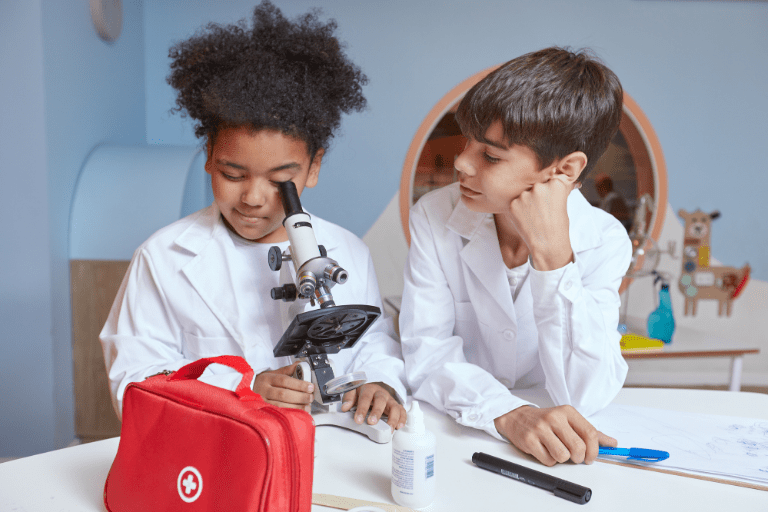
At Kids USA Montessori, learning is an active process. Our classrooms are filled with hands-on materials that engage children in exploration and discovery. Whether it’s working with math manipulatives, exploring science experiments, or diving into language arts, our students learn by doing.
MULTI-AGE CLASSROOMS
Our multi-age classrooms provide a rich social environment where younger children learn from their older peers, and older students reinforce their knowledge by helping younger ones. This approach promotes collaboration, empathy, and a sense of community.


PASSIONATE EDUCATORS
Our Montessori educators are passionate about guiding your child’s journey. They are trained in the Montessori method and create an environment where children are encouraged to ask questions, seek answers, and think critically.
INDIVIDUALIZED ATTENTION
With a low student-to-teacher ratio, your child will receive the personalized attention they deserve. We take the time to understand each child’s strengths, challenges, and interests, ensuring their educational journey is tailored to their needs.


CHARACTER EDUCATION
In addition to academic excellence, our program places a strong emphasis on character development. We teach children the values of respect, responsibility, and empathy, preparing them to be caring and compassionate members of society.
BEYOND THE CLASSROOM
At Kids USA Montessori, education extends beyond the classroom walls. We offer a variety of extracurricular activities, like cooking, gardening, life skills, Spanish classes along with community engagement opportunities that enhance your child’s learning experience.

EXPERIENCE THE WONDER OF MONTESSORI
We invite you and your family to experience the wonder of Montessori at Kids USA Montessori. Come and see our classrooms, meet our dedicated educators, and discover why our Montessori Lower Elementary program is the perfect fit for your child’s educational journey.

Lower Elementary Montessori: Building the Foundation for Lifelong Learning
Montessori education for lower elementary students focuses on nurturing independence, fostering a love for learning, and providing a structured yet flexible environment where children can thrive. Kids USA Montessori believes in a holistic approach to education that emphasizes the importance of academic, social, and emotional growth during these foundational years. In this article, we’ll explore the key elements that make Montessori lower elementary education so unique and beneficial for young learners.
The Key Features of a Lower Elementary Montessori Classroom
A Montessori lower elementary classroom is a carefully curated environment designed to promote learning through exploration and discovery. It’s a space where structure meets flexibility, giving children the freedom to move, explore, and learn at their own pace. The environment is rich with Montessori learning materials that invite hands-on engagement, allowing children to work independently or in small groups.
- Multi-age classrooms: Students in lower elementary, typically ages 6 to 9, learn together, promoting peer teaching and leadership.
- Freedom within limits: Students have the autonomy to choose their work, but within structured guidelines that ensure they cover essential subjects.
- Prepared environment: The classroom is set up to be child-centered, encouraging independent learning and exploration.
- Self-paced learning: Students progress through lessons as they master concepts, ensuring that each child is met at their level.
- Emphasis on order and organization: Children learn to take responsibility for their environment by organizing materials and maintaining a neat workspace.
- Hands-on learning: The use of Montessori materials allows students to grasp abstract concepts through tangible, real-world experiences.
- Collaboration and individuality: While independence is encouraged, children often work together, sharing ideas and learning from one another.
How Montessori Fosters Independence in Lower Elementary Students
Montessori education places a strong emphasis on developing independence from a young age. In the lower elementary years, this approach is crucial as students begin to take more responsibility for their learning. At Kids USA Montessori, children are encouraged to manage their time, make decisions, and solve problems on their own, giving them a sense of ownership over their education.
Montessori teachers act as guides rather than traditional instructors, which allows students to take the initiative in their learning journey. By offering choices, Montessori fosters a mindset of responsibility, decision-making, and self-reliance. When children are trusted with their education, they learn to trust themselves.
Montessori Materials and Their Role in Lower Elementary Learning
Montessori learning materials are not just tools; they are a fundamental part of the learning experience. These materials are designed to engage children’s senses and help them understand abstract concepts through concrete, hands-on activities. In a lower elementary classroom, you’ll find a wide array of these materials, each serving a specific purpose in a child’s educational development.
- Sensorial materials: Help children refine their senses by exploring shapes, colors, textures, and sounds.
- Math materials: Tools like the golden beads and multiplication boards make complex math concepts more accessible and fun to learn.
- Language materials: Moveable alphabets and grammar symbols help students develop reading, writing, and grammar skills in an interactive way.
- Geography and science materials: Items like puzzle maps and botany cards foster a deep understanding of the natural world and different cultures.
- Practical life materials: Tasks like sweeping or pouring teach children life skills while strengthening motor coordination and focus.
- Cultural materials: Introduce children to the arts, history, and the broader world, enriching their global perspective.
These materials help children build on previous knowledge and move from concrete to abstract understanding in subjects like math, language, and science.
How Collaborative Learning Happens in Montessori Lower Elementary
Collaboration is a cornerstone of Montessori education, and in the lower elementary years, it becomes even more important as children are naturally more social and curious about working with their peers. In a Montessori classroom, collaborative learning is seamlessly integrated into daily activities.
Children work together on projects, help each other solve problems, and engage in discussions that deepen their understanding of the material. This type of group work teaches them how to communicate effectively, listen to others’ perspectives, and work as a team. Whether it’s a science experiment, a math challenge, or a group reading, collaboration encourages mutual respect and shared learning experiences.
Supporting Social-Emotional Growth in Lower Elementary Students
Social and emotional development is as critical as academic growth in Montessori education. The lower elementary classroom provides ample opportunities for students to learn essential life skills like empathy, patience, and conflict resolution. At Kids USA Montessori, these aspects are integrated into the daily routine, ensuring that students develop a strong sense of self and respect for others.
Teachers facilitate discussions on feelings, guide children through social situations, and encourage positive behavior through praise and modeling. Montessori education empowers children to express their emotions in a healthy way and equips them with the skills to navigate relationships.
Montessori Lower Elementary Curriculum: Math, Language, and Beyond
The Montessori curriculum is designed to be holistic and well-rounded, covering core academic subjects while also nurturing creativity and curiosity. In lower elementary, students dive deeper into subjects like math, language, science, and geography. Lessons are interconnected, showing children how different subjects relate to one another, encouraging a more comprehensive understanding of the world.
- Math: Concepts such as multiplication, division, fractions, and geometry are introduced using hands-on materials like the bead chains and geometric solids.
- Language: Students learn spelling, grammar, and sentence structure through engaging activities such as reading stories, writing journals, and using language boxes.
- Science: Experiments and research projects encourage exploration of topics like biology, physics, and chemistry.
- Geography: Maps, globes, and continent studies expose students to world cultures, ecosystems, and the interconnectedness of all life.
- Art and music: Creativity is fostered through painting, drawing, sculpting, and playing instruments, encouraging expression and fine motor skills.
This approach ensures that children not only learn facts but also develop a deep love for learning itself.
Why Montessori Lower Elementary is Ideal for Lifelong Learners
Montessori education isn’t just about teaching academic subjects; it’s about fostering a lifelong love of learning. By providing a nurturing, engaging environment where children can explore at their own pace, Montessori builds the foundation for inquisitive, self-motivated learners who carry their curiosity well into adulthood.
Children in a Montessori lower elementary program learn how to think critically, solve problems creatively, and seek out knowledge independently. These skills are essential for success in both academic and life pursuits, making Montessori an ideal choice for developing lifelong learners.
Frequently Asked Questions (FAQs)
1. What age group is covered in the Montessori Lower Elementary program?
The Montessori Lower Elementary program typically serves children ages 6 to 9. This multi-age grouping allows for peer learning and fosters leadership skills among older students.
2. How does Montessori handle subjects like math and reading for this age group?
Montessori uses hands-on materials and individualized instruction to teach subjects like math and reading. Children progress at their own pace, ensuring they understand each concept fully before moving on.
3. How are Montessori lower elementary students assessed without traditional grades?
Montessori relies on observation, self-assessment, and teacher feedback to gauge student progress. Instead of grades, students receive detailed feedback that focuses on personal growth and mastery of skills.
4. How can Montessori lower elementary students be prepared for traditional schooling later on?
Montessori students develop strong foundational skills in critical thinking, problem-solving, and self-discipline, which prepare them well for transitioning to traditional schooling environments if needed.
5. What role do parents play in a Montessori lower elementary education?
Parents are partners in their child’s Montessori education, providing support at home and staying engaged with the school community. Montessori schools often encourage open communication between teachers and parents to ensure the child’s success.
By embracing the Montessori method in lower elementary education, students are set on a path toward becoming independent, confident, and lifelong learners. Kids USA Montessori remains dedicated to providing an enriching environment where each child can thrive both academically and emotionally.
